On friday the twenty second, my AP environmental science class had the opportunity to go the wastewater treatment plant in Franklin New Hampshire. The trip started with Alan pulling into the road the treatment plant was connected to. One the right we could see a river and on the left we could see what looked like a man made pile of dirt, which Alan pointed out was actually landfill. We followed the road till we reached a series of buildings, most of them brick. We all hopped out of the buss and into the cold. Alan led us into one of the buildings where we were introduced to Art and Ken, workers at the plant. 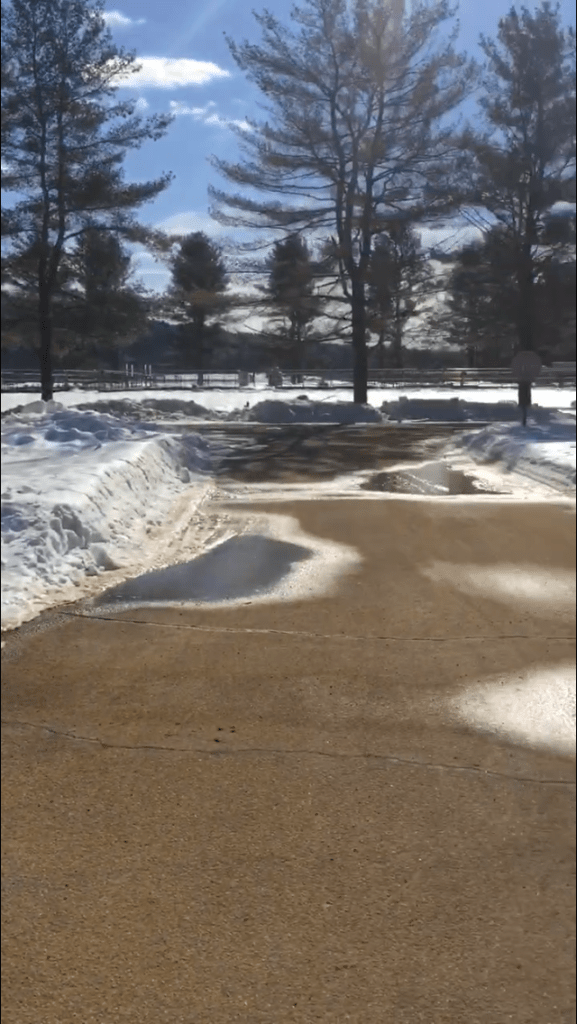
Ken began talking about basic information on the plant and then proceeded to talk about the Clean Water Act, an act establishing the basic structure for regulating pollutants released into the waters of the United States. Ken talked about how the Clean Water act produced the money to make the plant and others like it. Ken seemed thankful for the treatment plan as he recalled the condition of the river before the plant; “when you looked at a river all you saw was toilet paper, feces, anything that was flushed went to the rivers”. After our talk, ken led us outside and to the Headworks, where the water first enters the plant. Ken talked about how this is where they measure how much water enters the plant. After the brief stop at the Headworks, our class was taken to the primary clarifier where oils, greases, and solids are removed. Ken the listed the three types of solids that they remove from this tank. “It has three types of solids. You have floatable solids which is household grease or anything that floats… you have sedible solids that will settle out from the bottom… and the third solid is dissolved solids… those solids tend to be treated down the line” Ken then points out what looks like a huge dust pan that sits along the edge of the clarifier. Ken says that its used mostly to pick up the grease where it then gets pumped downward and removed. Once it was time to move on, Ken and Art took us to the secondary clarifier and aeration basin. Ken and Art then go on to describe how the secondary clarifier removes all the solids that the primary clarifier missed. Art then points out the aeration basin where microorganisms eat dissolved solids “All these tanks right here are full of microorganisms. There in there and there consuming a lot of those dissolved solids Ken was talking about” Art says. The group then moved on and down through an underground tunnel where the we got to see the more technical aspect of the operation. Ken and Art proceed to identified a number of pipes and pumps as we wandered towards the exit. Our final stop was at the filtration and disinfection building, the final stop before water is released back into the water. Ken and Art explain that using ultraviolet light is far better than using chlorine because adding chemicals is less eco friendly. That concluded our tour of the wastewater treatment plant and the class was then driven back to school.
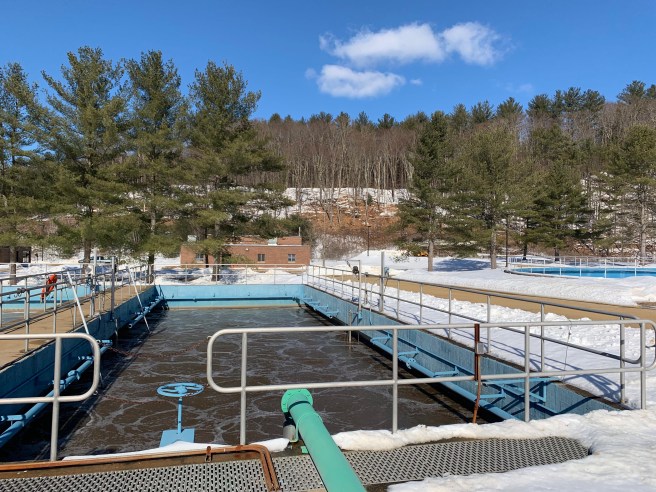
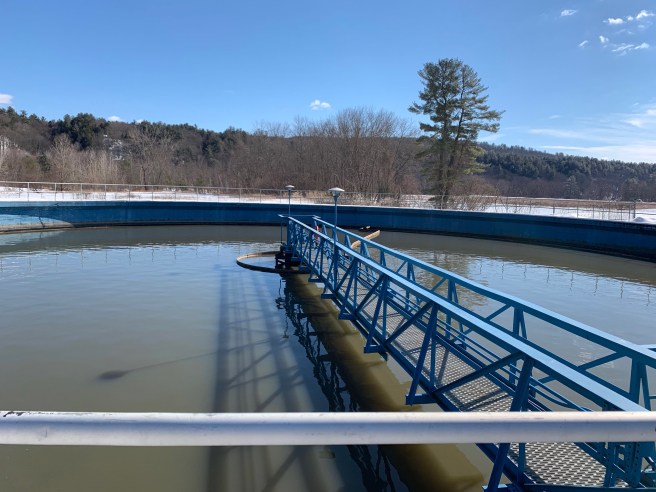
Before going on this field trip I had never seen a treatment plant before so everything I saw there was totally new to me. I learned alot from Art and Ken who were super welcoming. I think one of the coolest things I learned about during my visit was how the treatment plant actually controls how many microorganisms exist in the aeration tank. I remember Ken talking about they treat micro organisms like humans. They need appropriate living conditions, and food just like us. Before coming on this field trip I could never really think of any large scale solutions the government has used to help the environment. Now I realize that the government does help and that the treatment plant is a perfect example. This field trip ultimately left me feeling more hopeful about our environment future than I was before.

 AP Enviormental Science